Sunday, May 25, 2014
So nobody is singing at your church? It may not be the music....
Just read yet another blog railing against modern worship music and why people don't sing at church anymore... *sigh*..... here we go...
It's interesting how many people want to put the blame on the worship leaders, musicians, the volume of the music, the style of the music, etc. Bla bla bla bla blaa. Frankly, I'm a little sick of it. There is one really major reason why more people don't participate in corporate praise that nobody ever mentions, and it has nothing to do with music: nobody is preaching about it from the Bible.
Despite the fact that singing is commanded in the scriptures repeatedly, and that music plays a crucial part in biblical congregational worship, almost no one ever teaches it as a mandatory spiritual discipline. It's hardly mentioned and when it is it is relegated to an optional expression for those who enjoy it. That is not what you see in the scriptures. It is not optional. There are nearly fifty verses in the Bible that directly command believers to sing praises to God, as well as four hundred references to singing in corporate worship. Ephesians 5:19 says Christians should be in the practice of "addressing one another in psalms and hymns and spiritual songs, singing and making melody to the Lord with your heart." Notice it never mentions musical style or personal preference. It never excuses anyone who doesn't like the volume level or the spectator-style layout of the auditorium (never mind the fact that almost every concert ever is set up with the band on a stage and the audience facing them; it never seems to discourage anyone from singing along if they really want to).
In our church almost everyone sings because we teach singing as a command of scripture and an expression of love and joy. They may not like every song but they love every expression of adoration towards Christ and are eager to participate. Why? Because the leadership values it and has taught the congregation to value it from the scriptures.
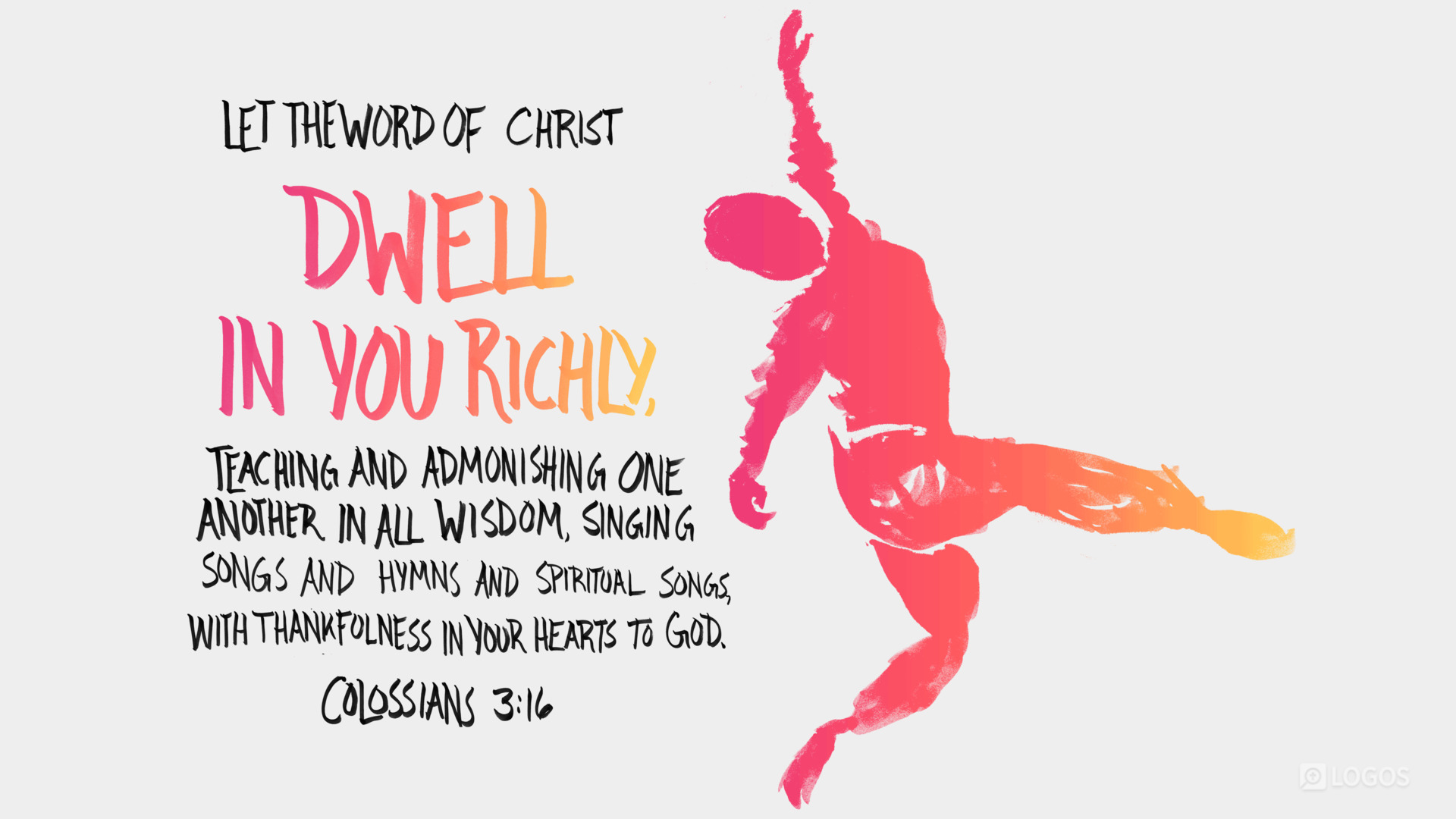
Take Colossians 3:16 for example, "Let the word of Christ dwell in you richly, teaching and admonishing one another in all wisdom, singing psalms and hymns and spiritual songs, with thankfulness in your hearts to God." Sounds like a command to me, with all the same authority of the Word of God behind it as any other command. I wonder if we taught obedience in the area of congregational singing from the pulpit the same way we teach obedience in the area of tithing or praying or sexual purity, we just might see some people begin take it more seriously.
If people aren't singing at your church, it might not be because the music is too loud. It might not be that no one knows the songs (it takes like 5 seconds to learn a pop song off the radio; I think we can handle a new chorus or two every now and then). But it just might be because the leadership of your church doesn't teach it as a command to be obeyed. Maybe we should quit blaming the band and the worship leader and start looking to the pulpit for a change.
(ok, deep breath.) I'm good now. Whew. For more on this perspective, here is a great blog on the biblical approach to congregational singing.
Tuesday, May 13, 2014
A Place At The Table: The Gospel According to... Mephibosheth?!?
Week
18, Day 2…. Love this beautiful picture of the gospel in the story of Mephibosheth…
“And
David said to him, ‘Do not fear, for I will show you kindness for the sake of
your father Jonathan, and I will restore to you all the land of Saul your
father, and you shall eat at my table always.’ And [Mephibosheth] paid homage
and said, ‘What is your servant, that you should show regard for a dead dog
such as I?’ … So Mephibosheth lived in Jerusalem, for he ate always at the
king’s table. Now he was lame in both his feet.” (2 Sam. 9:7-8, 13)
The
story of Mephibosheth begins back in 2 Samuel 4:4: “Jonathan, the son of Saul,
had a son who as crippled in his feet. He was five years old when the news
about Saul and Jonathan came from Jezreel, and his nurse took him up and fled,
and as she fled in her haste, he fell and became lame. And his name was
Mephibosheth.”
The
name literally meant “dispeller of shame,” and it carried within it the idea of
a breath of air blowing away shame and humiliation, specifically as it related
to idol worship. In 1 Chronicles 8:34, his name is recorded as Merib-baal,
meaning “grapples with or struggles against Baal,” a pagan deity that was
commonly worshipped in that region. Both names suggest that idol worship had
brought shame and humiliation to Israel, and maybe Jonathan had hoped that his
heritage would be to one day put an end to that shame and restore Israel to the
pure worship of God again. Whatever the reason, Mephibosheth’s very name
invoked hope for the future.
That
day in the nursery when he was five, all hope must have seemed lost. One
minute, he is the son of a prince, the grandson of the King, in the line to
assume the throne. The future seemed bright and certain. The next a messenger
from Jezreel is announcing that his father and grandfather have been killed in
battle. His nurse knows the chaos that will come in the wake of this news:
there will be a mad scramble for power. Death and bloodshed in a desperate grab
for power by relatives and kinsmen. And there is David. The sworn enemy of
Saul. Rumor has it that God has chosen him to be king over Israel. Surely, he
will come and put to death any that stand in his way.
In
fear, the nurse snatches little Mephibosheth up, hurriedly packs a few things
she will need in hiding, and runs from the nursery. What happens next is a
blur; all she knows is she is falling. Hard. Mephibosheth is injured. Both feet
are crippled by the accident. He will never walk again. In a culture where the
strength of a man to work his field and tend his flock is everything, Mephibosheth’s
bright future, all the hopes and dreams of his father for him, crumble into
ashes.
Mephibosheth.
Dispeller of Shame. His own name must have become a cruel
joke to him, and it probably felt like gravel in his mouth whenever he spoke
it. How many times he must have heard it on the lips of others and thought, “Dispeller of Shame? Ha! Dispeller of Hope,
is more like it.” So for years, Mephibosheth lives in humiliation,
depending on the pity and charity of others, unable to contribute to the work,
hding out, living in constant fear that his identity as a Saul’s grandson might
be discovered and he be put to death. Maybe
it would be better that way, he might have thought. After all, I am already as good as dead. A dead dog in the street. No
one will even miss me, except those to whom I have become a burden, and they
will probably be relieved.
You
can imagine what he must have felt the day the messengers from King David
showed up at his house, asking for him – by
name! He must have thought, This is
it. I’m dead. The day I have dreaded for so long has finally come. He can
hardly believe his ears when he hears why they have come. David doesn’t want to
kill him; David wants to show him kindness for the sake of his father.
His
head must have been spinning when David called his name: “Mephibosheth!” Dispeller of the Shame of Israel. Bringer of Hope.
Somehow it didn’t sound like a cruel joke anymore when he said it. “Do not
fear, for I will show you kindness for the sake of your father Jonathan…”
Because of a sacred promise, a covenant between David and Mephibosheth’s
father, the King wants to take all the love and kindness he had for Jonathan
and give it to him! He had nothing to offer David. And David certainly didn’t
owe him anything. By all rights, David should have had him slain as the blood
relative of his bitter enemy and rival to the throne. Ha! The throne! Sure, as long as I can get somebody to carry me up and
sit me on it!
David
continued,”… and I will restore to you all the land of Saul your father…” Could
this really be happening? All that was lost is being restored to him, even
though he no longer has any rightful claim to it, much less the power to make
such a claim. And here is David simply handing it to him. And for no other
reason that because it pleased him to do it!
But
David wasn’t finished. “…and you shall eat at my table always.” This last bit
must have been almost too much for Mephibosheth to bear. King David had already
been extravagantly generous in honoring his covenant with his father Jonathan
as if it had been with him directly, in giving back to him all the land that
was lost to their family, in letting him
live! It would have been more than Mephibosheth could have ever dreamed
possible if David had sent him away with all of that and had never seen or
spoken to him again. But instead, David gives him a place with him, a seat of
honor, at his table, beside him, always!
I
don’t want to rush past this and miss this, because this is, I believe, where
the gospel shines most clearly in this story. David wanted Mephibosheth to be with him always. He wanted to get to know him, to dwell with
him, for him to be like one of his own sons. For the first time since that
horrible accident all those years ago, Mephibosheth must have felt wanted!
It
must have undone him completely. Scripture records his response to this
overwhelming of David: “And [Mephibosheth] paid homage” – in the original
Hebrew it literally means to prostrate, to
fall down on your face in submission before someone – “and said, ‘What is your
servant, that you should show regard for a dead dog such as I?’ “ All those
years of living in fear and hiding who he really was, of feeling the weight of
shame and humiliation, of having no hope for his future, and of feeling like a
burden to a family to whom he didn’t belong, all that just melted away like waking
up from a bad dream. Almost in echo of the day his future was suddenly snatched
away from him and he was plunged into a nightmare, he found himself suddenly
living in the King’s palace, eating at his table, accepted as a friend and
member of his own family. It’s called grace. Undeserved favor. Unconditional
love and kindness. For no other reason that because it pleases the King to do
so.
This
is one of my favorite stories in scripture because it my story, too – Our story.We are Mephibosheth. Helpless.
Hopeless. “strangers to the covenant of promise, having no hope and without God
in the world.” (Eph. 4:12) But like Mephibosheth, we are the recipients of
astonishing grace, based on a blood covenant made long ago, before we were
born. Not for our own sake, but for the sake of Jesus Christ and His blood shed
for us, we are welcomed into the family of the King, and given a place at His
table – always!
Paul
describes our part in this story well: “And
you were dead in the trespasses and sins in which you once walked, following
the course of this world, following the prince of the power of the air, the
spirit that is now at work in the sons of disobedience— among whom we all once
lived in the passions of our flesh, carrying out the desires of the body and
the mind, and were by nature children of wrath, like the rest of mankind. But
God, being rich in mercy, because of the great love with which he loved us,
even when we were dead in our trespasses, made us alive together with Christ—by
grace you have been saved— and raised us up with him and seated us with him in
the heavenly places in Christ Jesus, so that in the coming ages he might show
the immeasurable riches of his grace in kindness toward us in Christ Jesus. For
by grace you have been saved through faith. And this is not your own doing; it
is the gift of God, not a result of works, so that no one may boast.” (Eph.2:1-9)
Our
sin had alienated us. We were enemies of the King, living in rebellion. Our
selfishness had crippled us, made us unable to walk in the way we were meant
to. We had no power to save ourselves. No future to give us hope. We were “dead
dogs” for all intents and purposes. “But God” – two of the sweetest words in
scripture – showed us unfathomable grace for Jesus’ sake. And here is the part
I love most: “so that in the coming ages He might show the immeasurable riches
of His grace in kindness towards us in Christ Jesus.”
In the
coming ages.
Though we may feel like Mephibosheth today, there is a new King in town, and
His Kingdom is coming even now. In that Kingdom we have been given a seat at
the table. “Because of the great love with which He loved us.” Take that to
heart today, friend. Trust in the kindness of Jesus. He wants you to be with
Him so bad, not even death could stop him. Let the truth of that sink in today
and truly be a Dispeller of Shame.
Labels:
bible,
christ,
christian,
christianity,
Chronicles,
David,
God,
gospel,
grace,
Hebrews,
jesus,
jewish,
Jonathan,
Mephibosheth,
Merib-baal,
old testament,
Samuel,
Saul,
scriptures,
spirit
Thursday, May 8, 2014
David's Worship Band
Week 17, Day 4 of the Grand Story…. David assembles a worship band…
“David also commanded the chiefs of the Levites to appoint their brothers as the singers who should play loudly on musical instruments, on harps and lyres and cymbals, to raise sounds of joy…"
(1 Chronicles 15:16)
When it came time to bring the ark of the covenant to Jerusalem, David assembled a team of singers and musicians to accompany it. The ark represented the very presence of God Himself among the people, which is the end goal of the entire redemptive plan of God. This was an occasion of significant joy to the Israelite people. The presence of God was everything. It was their identity. It was what set them apart from every other nation on earth. It had been gone from the center of their culture for some twenty years. Now it was being restored to its proper place: the very center of their entire lives.
To celebrate appropriately, David commanded a worship team be assembled. I want everyone to notice this: He established the percussion section FIRST! Guess what? God likes drums in worship. And He wants them played loudly. If you don’t like that, guess who has to adjust? (I didn’t write the Bible; I’m just showing you what it says.) Next he brought in guitars. He even designated lead guitarists! Six of them! There was a horn section, too. And a musical director who “understood” how to arrange it all. (1 Chron. 15:19-24)
David’s job description for the worship band was simple: “play loudly on musical instruments… to raise sounds of joy.” The volume of the music is directly tied to the hearts of the people. Consistently throughout scripture, when the people were overwhelmed with the greatness of God, they declared that His praise by making a loud and joyful noise. It was believed that it was due Him – that He deserved it by right – and to withhold it was an offense.
Look, everybody has an opinion when it comes to church music. We all have our preferences and tastes. The problem is when we kid ourselves that what we think actually matters. It just doesn’t. What we ought to be asking is, What does kind of worship music does God like? Does He have a preference? Because if He does, and if we elevate our traditions and opinions and preferences over His direct commands, then whatever else we think we are doing, we are not worshiping. We are merely singing religious songs about God to make ourselves feel better.
David knew worship music. He was not only a man after God’s own heart (God’s words, not man’s), but he wrote a significant portion of the worship music we find in scripture. David seemed to know what God wanted from our worship music, and it can be summed up in one word: LOUD. Not for the sake of being loud, or trying to be relevant to the culture of the day, but because loud is what joy sounds like, based on the authority of scripture.
Christians have a lot to celebrate – more than anyone else in the history of the world, in fact. When people celebrate, they throw a party. So, because the Bible commands it, Sunday mornings at The Ridge will continue to be more like a wedding reception than a funeral.
“David also commanded the chiefs of the Levites to appoint their brothers as the singers who should play loudly on musical instruments, on harps and lyres and cymbals, to raise sounds of joy…"
(1 Chronicles 15:16)
When it came time to bring the ark of the covenant to Jerusalem, David assembled a team of singers and musicians to accompany it. The ark represented the very presence of God Himself among the people, which is the end goal of the entire redemptive plan of God. This was an occasion of significant joy to the Israelite people. The presence of God was everything. It was their identity. It was what set them apart from every other nation on earth. It had been gone from the center of their culture for some twenty years. Now it was being restored to its proper place: the very center of their entire lives.
To celebrate appropriately, David commanded a worship team be assembled. I want everyone to notice this: He established the percussion section FIRST! Guess what? God likes drums in worship. And He wants them played loudly. If you don’t like that, guess who has to adjust? (I didn’t write the Bible; I’m just showing you what it says.) Next he brought in guitars. He even designated lead guitarists! Six of them! There was a horn section, too. And a musical director who “understood” how to arrange it all. (1 Chron. 15:19-24)
David’s job description for the worship band was simple: “play loudly on musical instruments… to raise sounds of joy.” The volume of the music is directly tied to the hearts of the people. Consistently throughout scripture, when the people were overwhelmed with the greatness of God, they declared that His praise by making a loud and joyful noise. It was believed that it was due Him – that He deserved it by right – and to withhold it was an offense.
Look, everybody has an opinion when it comes to church music. We all have our preferences and tastes. The problem is when we kid ourselves that what we think actually matters. It just doesn’t. What we ought to be asking is, What does kind of worship music does God like? Does He have a preference? Because if He does, and if we elevate our traditions and opinions and preferences over His direct commands, then whatever else we think we are doing, we are not worshiping. We are merely singing religious songs about God to make ourselves feel better.
David knew worship music. He was not only a man after God’s own heart (God’s words, not man’s), but he wrote a significant portion of the worship music we find in scripture. David seemed to know what God wanted from our worship music, and it can be summed up in one word: LOUD. Not for the sake of being loud, or trying to be relevant to the culture of the day, but because loud is what joy sounds like, based on the authority of scripture.
Christians have a lot to celebrate – more than anyone else in the history of the world, in fact. When people celebrate, they throw a party. So, because the Bible commands it, Sunday mornings at The Ridge will continue to be more like a wedding reception than a funeral.
Labels:
christ,
christian,
christianity,
church,
contemporary,
David,
God,
holy spirit,
hymns,
jesus,
music,
praise,
worship
Wednesday, April 30, 2014
Fearless
-->
“The LORD is my light
and my salvation; whom shall I fear?
The LORD is the stronghold of my
life; of whom shall I be afraid?” (Psalm 27:1)
David had plenty of reason to be afraid. Few men in history have had giants, kings, armies, even entire nations of people trying to kill him. Yet David didn’t let fear control his life. He knew it, felt it, but didn’t surrender to it. How was he able to withstand the daily terror of running for his life?
David’s confidence was in God, specifically expressed in Psalm 27 by three word pictures: light, salvation, and a stronghold. And because God was these three things to him, David had the confidence to say, “Whom shall I fear?” Why these three pictures? What do these three things have to do with David not being afraid of anyone or anything?
To answer this question, I asked my small group what things they afraid of. Specifically I phrased it this way: “What are some fears that have marked your life to this point?” I had a hunch that their answers would reveal exactly why David trusted God for light, for salvation, and for a stronghold.
David had plenty of reason to be afraid. Few men in history have had giants, kings, armies, even entire nations of people trying to kill him. Yet David didn’t let fear control his life. He knew it, felt it, but didn’t surrender to it. How was he able to withstand the daily terror of running for his life?
David’s confidence was in God, specifically expressed in Psalm 27 by three word pictures: light, salvation, and a stronghold. And because God was these three things to him, David had the confidence to say, “Whom shall I fear?” Why these three pictures? What do these three things have to do with David not being afraid of anyone or anything?
To answer this question, I asked my small group what things they afraid of. Specifically I phrased it this way: “What are some fears that have marked your life to this point?” I had a hunch that their answers would reveal exactly why David trusted God for light, for salvation, and for a stronghold.
My hunch paid off big time:
- “I fear I will disappoint my family, that I will fail as a father and a husband.” “I’m afraid that something bad will happen to my kids.”
- “I sometimes wonder if God will really save me, or that I’ve messed up so bad He will abandon me.”
- “I wonder if today will be the day I die.”
- “I worry… What if something happens to me that I can’t handle?”
As everyone shared, I jotted
down generally the fear they expressed: failure, abandonment, security and
safety, fear of the unknown. As I looked over the list, my suspicions were confirmed…
Next, I asked the group how
people typically handled fear. I told them I didn’t want “Sunday school”
answers here. We all know how we should
handle fear, but how do we usually
handle it? Sometimes we react in anger when we feel threatened and lash out.
Other times we seek to control our surroundings by insulating and isolating
against even the possibility of being hurt.
It got deep, I can tell you.
We hit some nerves to be sure. The Holy Spirit was uncovering some things that
needed to be faced and dealt with at the cross of Christ.
I turned to Psalm 27:1 and
read the verse, “The LORD is my light and my salvation… the LORD is the stronghold
of my life.” I asked the group, “Why those three things? Of all the ways David
has described God to in the Psalms, what is it about these three descriptions
that makes David be able to say, ‘I don’t have to fear anything or anyone’?’
I told the group my theory: I
believed that all the fears we expressed fell into one of three categories –
fear of the unknown, fear of harm or danger, and fear of being vulnerable and
exposed. These three categories applied across the board: physically,
emotionally, and spiritually. My hunch at the beginning was that these three
word pictures David used – light,
salvation, stronghold – addressed these three categories of fear perfectly.
Light.
What does light do? It illuminates. It reveals. It exposes. It dispels darkness. When you walk into a dark room, you have no idea what you are walking into until you turn on the light. As soon as the light comes on, you can see what’s there, you can know the truth about your situation. Because God is his Light, David can know what’s really true – about his life, about himself, about God. He doesn’t have to try to figure it out himself, always wondering and second-guessing, “Did I make the right decision? Did I do the right thing?” He can know what’s true and walk in the security of that knowledge: “Teach me Your way, O LORD, and lead me on a level path because of my enemies.” (Ps. 27:11)
If one of our greatest areas
of fear is the unknown, God will be our Light and reveal the truth. We don’t
have to fear not knowing anymore! Jesus told His disciples, ““I am the light of the world. Whoever follows me will not walk in darkness,
but will have the light of life… If
you abide in my word, you are truly my disciples, and you will know the truth, and the truth will set you free.” (John 8:12, 31-32) Free from what?
Fear and the bondage it brings! Look, Christ faced down death and won. If we
put our trust in Him, “of whom shall we be afraid?”
Salvation.
What is salvation? The dictionary defines salvation as “a source or means of being saved from harm, ruin, or loss.” In Psalm 27 David describes the things that threaten to harm him – assailing enemies, armies encamped against him, war and violence, false witnesses defaming his character, even being abandoned by his own parents. If anyone needed saving, it was David!
But what was David’s
reaction to all this? “My heart shall not fear… yet I will be confident.” (Ps.
27:3) David’s confidence was not in his own strategy or skill or ability.
David’s confidence was in God. “The LORD is my salvation.”
One of the greatest
fears we all share is the fear of being destroyed with no one to rescue. We
fear death, we dear harm, we fear destruction. And not just physical threats;
some have gotten into such an overwhelming financial burden of debt, they fear
it will destroy them and their family. Some are held in bondage to addictions
to food, drugs, alcohol, pornography, sex, money, success, that they are
ruining their lives and see no way out. Others are being destroyed from the
inside out by their own bodies, racked with sickness, disease, or infirmity. We
need a Savior! “The LORD is my salvation.”
Now does God always
heal in this life? Does God always make our difficult circumstances go away?
No. But God offers salvation nonetheless – not always from something, but always through
something. We have the sure promise of a Holy God that this life is not all
there is. Those who trust in Him will see the Kingdom, where there is no more
sorrow, sickness, pain, or suffering. Forever.
When the apostle Paul
was addressing the suffering of persecuted Christians in the first century
church, he encouraged them with this truth:
“But we have this treasure in jars of clay, to show that the surpassing power belongs to God and not to us. We are afflicted in every way, but not crushed; perplexed, but not driven to despair; persecuted, but not forsaken; struck down, but not destroyed… So we do not lose heart. Though our outer self is wasting away, our inner self is being renewed day by day. For this light momentary affliction is preparing for us an eternal weight of glory beyond all comparison, as we look not to the things that are seen but to the things that are unseen. For the things that are seen are transient, but the things that are unseen are eternal.” (2 Cor. 4:7-9, 16-18)
David expressed it this way,
The
Lord IS our salvation, both in this life and the life to come. Let the world do
its worst. In mercy God will deliver us, or in mercy He will sustain us in the
midst of our suffering. But the Kingdom is coming. And those who trust Him will
be there. “Whom shall I fear?”“[What, what would have become of me] had I not believed that I would see the Lord's goodness in the land of the living!
Wait and hope for and expect the Lord; be brave and of good courage and let your heart be stout and enduring. Yes, wait for and hope for and expect the Lord.” (Ps. 27:13-14, Amplified)
Stronghold.
A stronghold is a fortress. High walls and ample defenses. It is stocked with provision and built for protection. Inside it, we are safe from all enemies.
Another
area of fear we all share is of being exposed and vulnerable. We fear revealing
our true selves to anyone because they might reject us, and that rejection is
too painful. We all find that out the hard way, don’t we? Our response is to
retreat into a fortress of our own making. Like Adam and Eve, we will build it
out of whatever is laying around – sticks, leaves, debris. Fragile things these
homemade strongholds.
The
truth is – if you really want to get down to it – is that we don’t know how to
build a stronghold; we only now how to build a prison. But we call it a
stronghold because it seems to work. It keeps out everything that might hurt us
and protects us from being exposed for ho we are. What we don’t realize is that
we aren’t keeping anything out, we are just keeping ourselves locked inside.
This
expresses itself in a number of ways in our lives:
·
The Poser: a
carefully crafted persona that we think everyone will like because we have
believed the lie that the true us – the one God made for His glory – is not
good enough. We dare not risk rejection of our truest self, so we invent one
based on what we think the culture (or our friends or parents or whoever) want
us to be. The problem is that it is a lie. Lies take an enormous amount of
spiritual, emotional, and mental energy to keep up. Eventually, they collapse
under the weight of our own lives and the result is devastation.
· The
Tyrant. This
is the person who seeks to control everything and everyone as a means of
protecting himself from pain. If he can foresee and prepare himself against
every possible eventuality and possibility of hurt, and take the necessary
steps to prevent it, then maybe he will not have his worst fears come true. The
over-protective parent. The domineering husband. The domineering wife. The
manipulative friend. The demanding boss. The workaholic. These are just a few
of the self-made strongholds that become prisons of fear.
·
The
Loner.
It stands to reason that if I never open my life to anyone then no one can hurt
me. I can never fail if I never risk. I can never be rejected if I never offer.
So he checks out. Life just rolls by and he passively watches from the
sidelines, numb to its pleasures as well as its pain. He seeks to preserve his
life by never living it. When he gets to the end of it, he realizes what he has
done and lunches into eternity in utter despair.
David
sang,
“For he will hide me in his shelter in the day of trouble;he will conceal me under the cover of his tent; he will lift me high upon a rock.And now my head shall be lifted up above my enemies all around me,and I will offer in his tent sacrifices with shouts of joy;I will sing and make melody to the Lord.” (Ps. 27:5-6)
So
how does that work? What is the difference between hiding in a prison we made
and a fortress God provides?
The
best answer I have ever seen is in 1 John 4:16-18)
“So we have come to know and to believe the love that God has for us. God is love, and whoever abides in love abides in God, and God abides in him. By this is love perfected with us, so that we may have confidence for the day of judgment, because as he is so also are we in this world. There is no fear in love, but perfect love casts out fear. For fear has to do with punishment, and whoever fears has not been perfected in love.”
John draws a direct
correlation between the love God has for us and our fear. What he is saying is
essentially this: “Look, if God knows the truth about you – the good, the bad,
and the ugly – and still loves you in spite of all that, what do you care what
anyone else thinks about you? If you don’t have to fear the rejection of God at
the judgment because of what Christ has done for you , then why would you fear
the judgment or rejection of anyone else? Who else matters?”
We can live freely,
love openly, and offer our true selves with wild abandon, because in Christ we
are accepted by the God who knows us best and loves us anyway. His love is the
stronghold of our lives where fear is kept out by His perfect love. The key
that opens the fortress to us is in the word abide. We don’t use that word much in our culture. A modern
translation might be “to move in an live there.” We make it our home. We settle
there and stay. How? Glad you asked…
Look again at 1 John
4:16: “So we have come to know and to
believe the love that God has for us.” A lot of us have heard that Jesus
loves us. Many even accept
intellectually the possibility that that might even be true. But it’s something
else altogether to truly believe it. Belief always results in a change of some
kind. If we say we believe something, we must either adjust our lives to align
with that belief or else admit that we don’t really believe it after all.
To believe the love
that God has for us – to rest the full weight of our lives on it – is to move
into a new neighborhood. We pack our things and leave behind that homemade
shack of sticks we have called our fortress, and move into the sprawling
freedom of being loved and accepted in Christ. Now make no mistake, there is
work to be done. There are things that are going to have to change. That’s why
John said that His love must be “perfected” in us, meaning it has to be
gradually brought to its maturity, its intended state. That’s a life-long,
ongoing process. But it is also an expression of His love because “the Lord
disciplines the one he loves, and chastises every son whom he receives.” (Heb.
12:6) His correction means He loves you and has accepted you!
So it doesn’t matter what anyone else
says or thinks, or how they react to your truest you. If you are in Christ, He
will be your defender. The LORD is the stronghold of your life. You are now
free to live, to love, and to offer all you were created to offer. Fearlessly.
Isn’t that good news? Don’t we all want
that kind of life? Can I say with David, “Because the LORD is my light, my
salvation, and my stronghold, I don’t have to live in fear anymore!”
Labels:
acceptance,
bible,
christ,
christian,
christianity,
church,
courage,
David,
faith,
fear,
fearless,
God,
holy spirit,
jesus,
light,
love,
Psalms,
salvation,
stromghold
Wednesday, April 23, 2014
HD or SD? Depends on your perspective...
Week 15, Day 3 of the Grand Story... reading in Psalm 73 about why God allows evil to seemingly prosper...
"For, behold, those who are far from You will perish; You have destroyed all those who are unfaithful to You. But as for me, the nearness of God is my good; I have made the Lord God my refuge, That I may tell of all Your works." (Ps. 73:27-28, NASB emphasis mine)
One of the difficulties we have in puzzling out why God allows evil to continue is in our very definitions of "good" and "evil." We tend to define these terms in relation to the effects we experience in the immediate moment. If it brings harm or pain or discomfort or death, we call it "evil." If it brings happiness, pleasure, comfort, prosperity, or good feelings, we call it "good." We can't for the life of us figure out why God seems to allow "evil" and withhold "good" from so many people.
It's a bit like HD versus Standard Definition. There is a standard definition we all assume about many things -- life, death, right, wrong, good, and evil. But there is something missing from the picture. We are settling for less than there is available. There is a clearer view available. God says,
"For my thoughts are not your thoughts, neither are your ways my ways, declares the Lord. For as the heavens are higher than the earth, so are my ways higher than your ways and my thoughts than your thoughts." (Isa. 55:8-9, ESV)
God has a "Higher Definition" than the Standard Definition" we are used to.
God defines "good" and "evil" in terms of distance from Him, from His heart. "Those who are far" from God perish. They miss what life is all about. They are born, live, and die completely cut off from why they were even created. Is there anything more evil than that?
Conversely, the Psalmist says, "the nearness of God is my good." Scripture defines "good" as that which brings us nearer to God. Many of the things we think of as "good" might actually pull us farther away from God -- success, prosperity, comfort, certain pleasurable experiences. Likewise, much of what we call "evil," particularly in terms of suffering, can actually turn out to be the best thing that ever happened to us because of the "nearness of God" we experience in those times. I am speaking here from personal experience, not just sappy Hallmark-card sentimentality. The testing of my faith has proven to produce good things in me every single time.
I am not saying that suffering and pain are good things. Please don't misunderstand me. What I am saying is anything that results in us being increasingly more like Jesus should be considered "good." I don't expect everyone to agree with me here, or share my convictions. That's okay. Even the Psalmist said, "When I pondered to understand this, It was troublesome in my sight... UNTIL I came into the sanctuary of God; Then I perceived their end." (Ps. 73:16-17, NASB) Sometimes how we see things depends on where we are standing. Until we come into the "sanctuary of God" -- into His presence and get His perspective -- our view will be limited to our own understanding. We will be seeing in standard def instead of HD.
Labels:
belief,
bible,
christ,
christianity,
evil,
faith,
God,
good,
HD,
hi def,
high definition,
jesus,
Psalms,
SD,
spirit,
spirituality,
standard definition,
suffering,
TV
Monday, April 14, 2014
"The LORD is Good!" - Easy for Me to Say?
-->
Week 15, Day 1 of the Grand Story…
"Oh, taste and see that the LORD is good! ... those who seek the LORD lack no good thing... The eyes of the LORD are toward the righteous and His ears toward their cry... The LORD is near to the brokenhearted and saves the crushed in spirit... The LORD redeems the life of His servants; none of those who take refuge in Him will be condemned." (from Psalm 34)
I love the Foo Fighters. Great band and I enjoy a lot of their music. "Learn to Fly" is one of my all-time favorites. But I have to admit they have one song in particular that really bugs me...
That doesn't make it “easy for me to say.” Just because I hold fast to my faith in the face of the worst life has to offer doesn’t mean I am naïve or inexperienced. In fact, it’s quite the opposite. It’s because I have experienced first hand the faithfulness of God in the middle of the storm. Ask Job. God doesn’t always spare us from the hard stuff, but He never leaves us to fend for ourselves. He always comes through. Always.
Always.
So whenever that Foo Fighters song comes on, I change it to something more suitable…
"I would have despaired unless I had believed that I would see the goodness of the Lord in the land of the living. Wait for the Lord; Be strong and let your heart take courage; Yes, wait for the Lord." (Psalm 27:13-14, NASB)
Week 15, Day 1 of the Grand Story…
"Oh, taste and see that the LORD is good! ... those who seek the LORD lack no good thing... The eyes of the LORD are toward the righteous and His ears toward their cry... The LORD is near to the brokenhearted and saves the crushed in spirit... The LORD redeems the life of His servants; none of those who take refuge in Him will be condemned." (from Psalm 34)
I love the Foo Fighters. Great band and I enjoy a lot of their music. "Learn to Fly" is one of my all-time favorites. But I have to admit they have one song in particular that really bugs me...
One of these days the ground will drop out from beneath your feet
One of these days your heart will stop and play its final beat
One of these days the clocks will stop and time won't mean a thing
One of these days their bombs will drop and silence everything
But it's alright
Yeah it's alright
I said it's alright
Easy for you to say
Your heart has never been broken
Your pride has never been stolen Not yet not yet
(These Days by the Foo Fighters)What a load of crap. What an arrogant load of absolute crap! David had his heart broken. Multiple times. He had his pride stolen by his own son, among many others. He experienced some of the worst life has to offer, not a little of which was by his own hand. But he could still say to his last breath, "Taste and see that the LORD is good." Life is good. It will be alright. There is a faithful God who will keep His promises. All of them. Every time. If we miss them it's because we listened to junk like this and lost all hope. It is possible to be "brokenhearted" and "crushed in spirit" and still say "I lack no good thing" because I trust God.
That doesn't make it “easy for me to say.” Just because I hold fast to my faith in the face of the worst life has to offer doesn’t mean I am naïve or inexperienced. In fact, it’s quite the opposite. It’s because I have experienced first hand the faithfulness of God in the middle of the storm. Ask Job. God doesn’t always spare us from the hard stuff, but He never leaves us to fend for ourselves. He always comes through. Always.
Always.
So whenever that Foo Fighters song comes on, I change it to something more suitable…
When the ground beneath my feet gives way
and I hear the sound of crashing waves
all my world is washing out to sea.
I’m hidden safe in the God who never moves
holding fast to the promise of the truth
that You are holding tighter still to me.
The Rock wont move and His Word is strong
The Rock won’t move and His love can’t be undone
The Rock of our Salvation!
(The Rock Won’t Move by Vertical Church Band)
"I would have despaired unless I had believed that I would see the goodness of the Lord in the land of the living. Wait for the Lord; Be strong and let your heart take courage; Yes, wait for the Lord." (Psalm 27:13-14, NASB)
Labels:
believe,
bible,
christ,
christianity,
dave grohl,
David,
faith,
foo fighters,
God,
jesus,
psalm
Wednesday, April 9, 2014
What Do You Want From a King?
-->
Week 14, Day 3 of the Grand Story...
"But today you have rejected your God, who saves you from all your calamities and your distresses, and you have said to him, ‘Set a king over us' ... when the Lord your God was your king. And now behold the king whom you have chosen, for whom you have asked; behold, the Lord has set a king over you." (1 Sam. 10:19; 12:12-13)
“It would seem that Our Lord finds our desires not too strong, but too weak. We are half-hearted creatures, fooling about with drink and sex and ambition when infinite joy is offered us, like an ignorant child who wants to go on making mud pies in a slum because he cannot imagine what is meant by the offer of a holiday at the sea. We are far too easily pleased.” -- CS Lewis, The Weight of Glory
I used to think I knew what I really wanted. I would do anything to get it, sacrifice important stuff to have what I wanted. I would even pray and ask God to let me have what I wanted. Only to find out it wasn't all that I thought it would be. Turns out it wasn't what I really wanted after all.
What I really wanted was Him. I just didn't know it at the time. The desires I had were really only ever going to be satisfied by the love of Christ. My vision was too small. I was aiming too low. I was asking for a stale saltine when God wanted to give me prime rib. But he would let me munch on that cracker until it was all gone, and I was still hungry. Then I would be ready for what He had in store all along.
Basically, it all comes down to who you want to be your king. What do you want out of him? Peace? Prosperity? Safety? Security? “A chicken in every pot and a car in every garage”? What we are willing to give up to get what we want says everything about who we really are. We learn that every four years, when we elect a new president. We listen to all the promises and the pretty speeches. Ultimately, we elect as a country the guy who promises us the most stuff, knowing full well he hasn’t a snowball’s chance in hell of delivering on half of it.
Why? Because we aren’t looking for a King – capital K– someone that demands our loyalty and unwavering submission to his authority for the good of the kingdom even at the cost of personal comfort and safety. We want a king – little k – to give us the good life right now. We would sign over every bit of freedom we have for a nice house, nice car, and free cable. Who are we kidding, we would sell our own children -- and we have done exactly that -- for more stuff now. We have rejected God as rightful King over our lives and replaced him with a smaller, scaled-down, easier-to-control version. We have cashed in holiness in exchange for immediate happiness, and the result is that we enjoy neither one!*
Here’s the kicker: We want to be like “all the other nations around us.” We don’t want to be different. We don’t want to stand out. We don’t want to be holy. Because to be holy is to paint a target on your back, to risk it all on the chance that God is faithful and will do everything He promised, if we would trust Him. But God makes us wait. He makes us endure suffering. He makes us work… hard! Why go to all that trouble when there is an easier way? Blend in. Disappear. Become invisible. That way you are free to do what you want, when you want, the way you want, and no one notices or calls you out. No one calls you to something higher or deeper or more meaningful.
O Father in Heaven! Save us from ourselves! Call us to something more! Stir in our hearts revival fires. Wake up your sleeping Bride! Bring glory to the earth through a holy people – Your Church! In the power and authority of the True King, I pray! Amen!
*I use the pronoun "we" to refer to the overall attitude of Americans in general, and the American Church in particular. I include my own propensity for short-sighted selfishness in this assessment.
Week 14, Day 3 of the Grand Story...
"But today you have rejected your God, who saves you from all your calamities and your distresses, and you have said to him, ‘Set a king over us' ... when the Lord your God was your king. And now behold the king whom you have chosen, for whom you have asked; behold, the Lord has set a king over you." (1 Sam. 10:19; 12:12-13)
“It would seem that Our Lord finds our desires not too strong, but too weak. We are half-hearted creatures, fooling about with drink and sex and ambition when infinite joy is offered us, like an ignorant child who wants to go on making mud pies in a slum because he cannot imagine what is meant by the offer of a holiday at the sea. We are far too easily pleased.” -- CS Lewis, The Weight of Glory
I used to think I knew what I really wanted. I would do anything to get it, sacrifice important stuff to have what I wanted. I would even pray and ask God to let me have what I wanted. Only to find out it wasn't all that I thought it would be. Turns out it wasn't what I really wanted after all.
What I really wanted was Him. I just didn't know it at the time. The desires I had were really only ever going to be satisfied by the love of Christ. My vision was too small. I was aiming too low. I was asking for a stale saltine when God wanted to give me prime rib. But he would let me munch on that cracker until it was all gone, and I was still hungry. Then I would be ready for what He had in store all along.
Basically, it all comes down to who you want to be your king. What do you want out of him? Peace? Prosperity? Safety? Security? “A chicken in every pot and a car in every garage”? What we are willing to give up to get what we want says everything about who we really are. We learn that every four years, when we elect a new president. We listen to all the promises and the pretty speeches. Ultimately, we elect as a country the guy who promises us the most stuff, knowing full well he hasn’t a snowball’s chance in hell of delivering on half of it.
Why? Because we aren’t looking for a King – capital K– someone that demands our loyalty and unwavering submission to his authority for the good of the kingdom even at the cost of personal comfort and safety. We want a king – little k – to give us the good life right now. We would sign over every bit of freedom we have for a nice house, nice car, and free cable. Who are we kidding, we would sell our own children -- and we have done exactly that -- for more stuff now. We have rejected God as rightful King over our lives and replaced him with a smaller, scaled-down, easier-to-control version. We have cashed in holiness in exchange for immediate happiness, and the result is that we enjoy neither one!*
Here’s the kicker: We want to be like “all the other nations around us.” We don’t want to be different. We don’t want to stand out. We don’t want to be holy. Because to be holy is to paint a target on your back, to risk it all on the chance that God is faithful and will do everything He promised, if we would trust Him. But God makes us wait. He makes us endure suffering. He makes us work… hard! Why go to all that trouble when there is an easier way? Blend in. Disappear. Become invisible. That way you are free to do what you want, when you want, the way you want, and no one notices or calls you out. No one calls you to something higher or deeper or more meaningful.
O Father in Heaven! Save us from ourselves! Call us to something more! Stir in our hearts revival fires. Wake up your sleeping Bride! Bring glory to the earth through a holy people – Your Church! In the power and authority of the True King, I pray! Amen!
*I use the pronoun "we" to refer to the overall attitude of Americans in general, and the American Church in particular. I include my own propensity for short-sighted selfishness in this assessment.
Subscribe to:
Posts (Atom)


